
Treendly vs Exploding Topics: which trend tool actually wins in 2026?

If you are shopping for a trend spotting tool in 2026, you have almost certainly landed on the same two names: Treendly and Exploding Topics. They look similar from the outside. Both promise to surface rising trends before they go mainstream. Both show you charts, categories, and related keywords.
But they are built for two different jobs, and the difference decides which one you should actually pay for. This is the honest, side by side breakdown, written by the team behind Treendly, and yes we are biased, so everything below is a claim you can check yourself in a free account.
One thing to get out of the way first, because it shows up in almost every comparison you will read: the common claim that "Treendly costs $99/month" is simply wrong. Treendly Pro is $99 per year. That single fact reshapes the entire value comparison, and we will come back to it.
The quick verdict
| Treendly | Exploding Topics | |
|---|---|---|
| Best for | Finding rising trends early, on a budget | Retrospective research on a huge keyword library |
| Pricing | Free plan, Pro at $99/year (~$8/mo) | Paid plans from $39/month (~$468/year) |
| Free plan | Yes, no card required | No |
| Core job | Discover trends you have not heard of | Look up trends you already have in mind |
| Database | Ruthlessly curated (1 kept per 174 signals) | Very large raw library |
| Trend tracking | Monitor up to 25 trends with alerts | Higher tracking caps on pricier tiers |
| Notion + Chrome | Yes, both | Limited |
| Free course | Yes | No |
Short version: if your goal is to discover the next thing early and you do not want to spend $500 a year to do it, Treendly wins. If you want the largest possible searchable archive and are happy to pay monthly for it, Exploding Topics is a reasonable pick. For most founders, marketers, ecommerce sellers, and creators, the first job is the one that pays the bills.
Pricing: this is where the comparison usually breaks
Most "X vs Treendly" articles quietly list Treendly at $99 per month and Exploding Topics at $39 per month, then conclude the cheaper looking tool wins. It is a tidy story. It is also not true.
Here is the real picture:
- Treendly: a genuinely free plan with no credit card, then Pro at $99 per year, which works out to roughly $8 per month, billed annually, with a 14-day free trial. Early users are grandfathered into this price for life.
- Exploding Topics: no free plan, with paid tiers that start around $39 per month and climb to $99 and $249 per month for the plans that unlock the interesting data and the API. $39 per month is about $468 per year.
So the actual entry comparison is $99 a year versus $468 a year. Treendly is not the expensive option. It is roughly five times cheaper than the cheapest paid Exploding Topics plan, and it still gives you unlimited trend searches, tracking, and the premium newsletter.
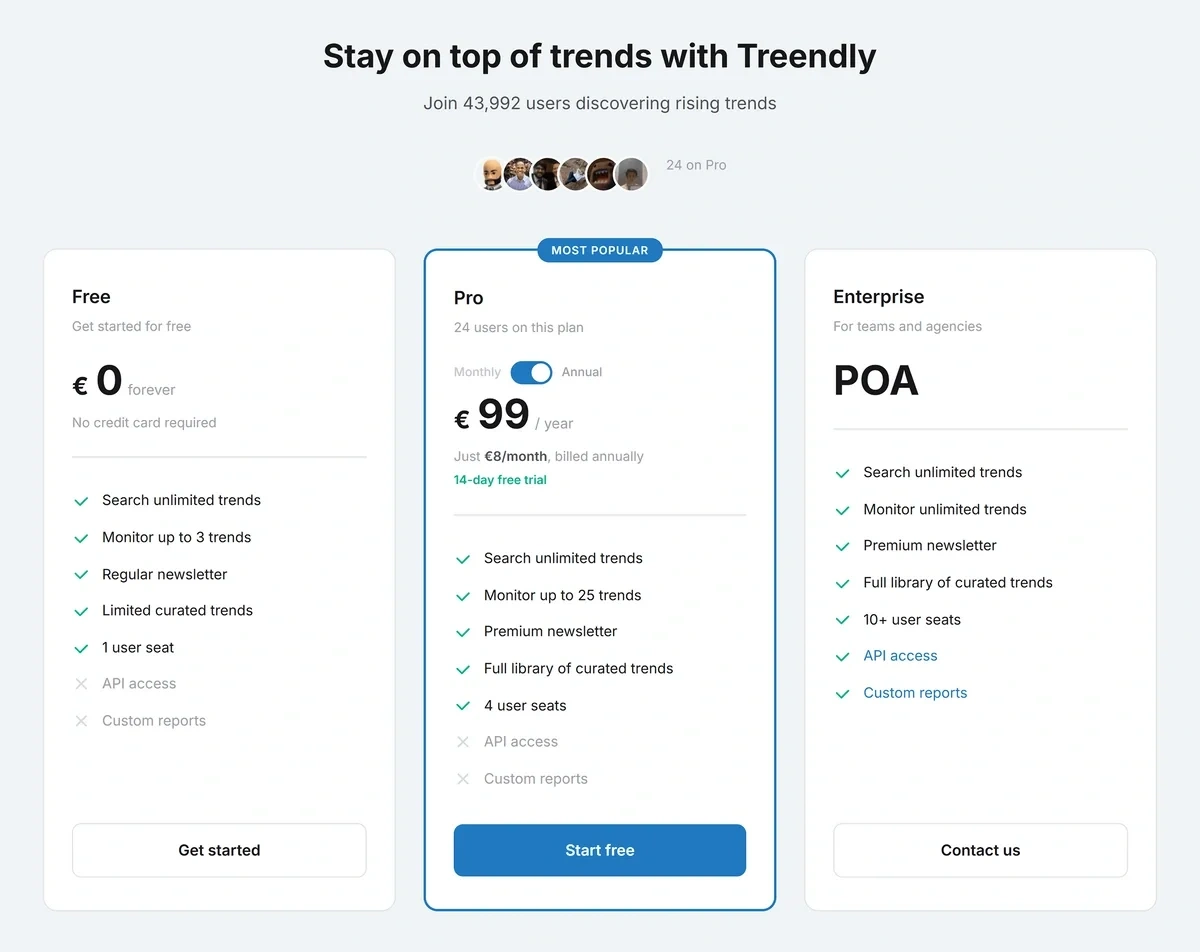
If budget matters at all, and for solo founders and small teams it always does, this is close to decisive on its own.
The trends database: curation beats raw volume
Exploding Topics leads with size. A library in the millions sounds impressive, and for pure lookup it is genuinely useful. If you already know the term you want and just need a chart, a bigger archive means you are more likely to find it.
But size cuts both ways. A database of everything is also a database of noise. The hard part of trend spotting was never "show me more trends." It is "show me the few that matter, before everyone else sees them."
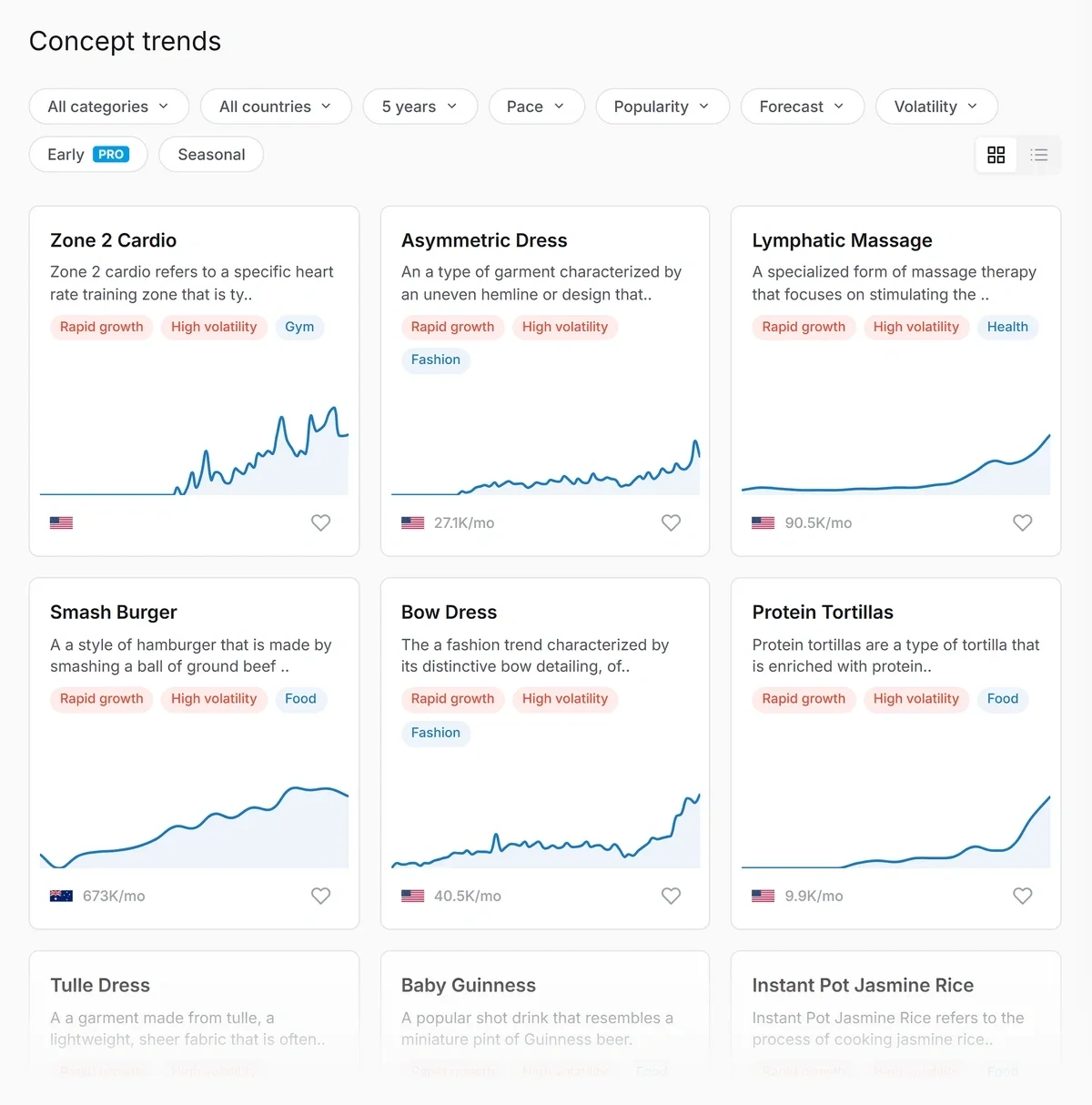
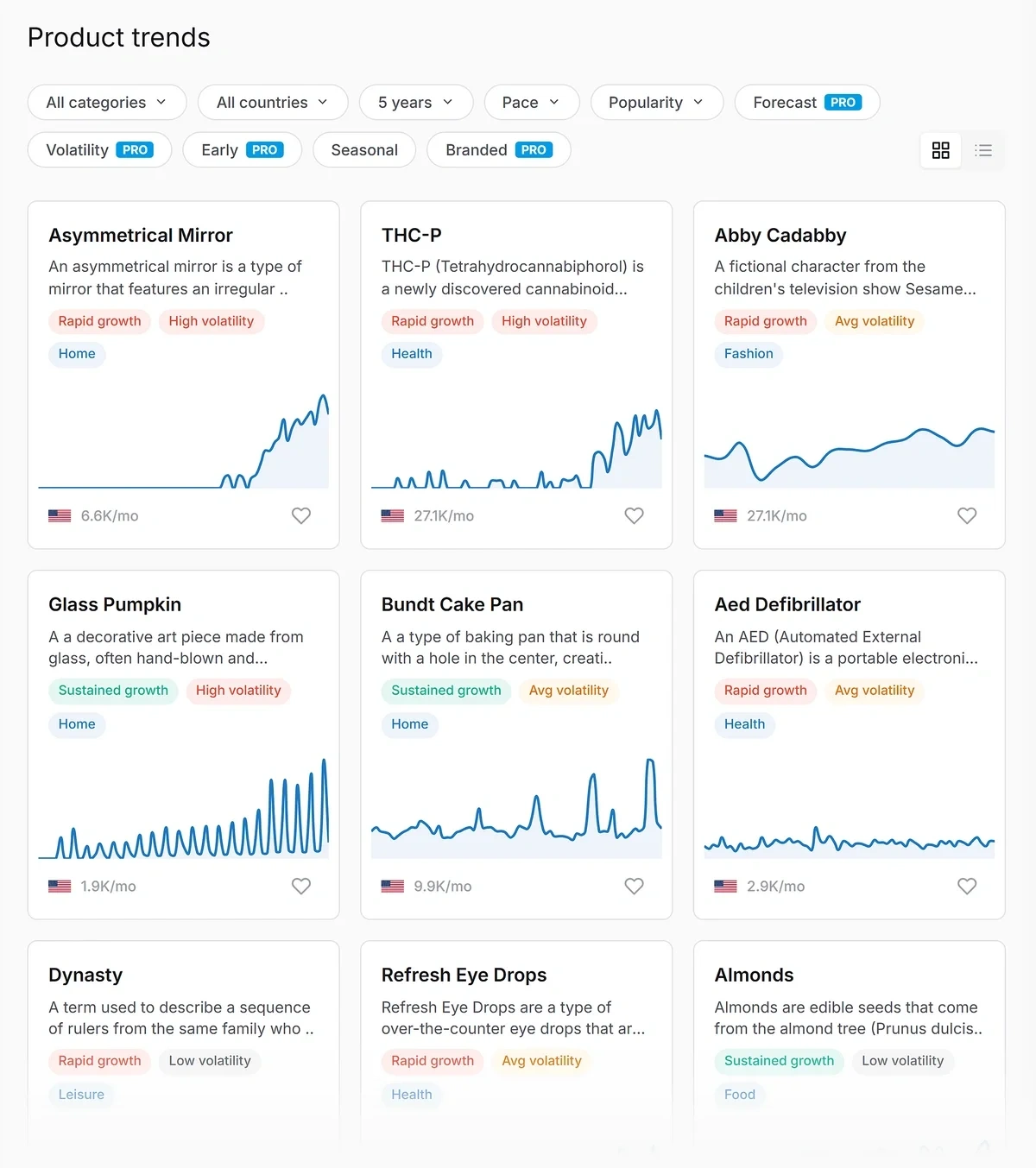
That is the whole design philosophy behind Treendly. For roughly every 174 signals we analyze across the internet, one earns a place in the curated feed. You are not scrolling a haystack looking for a needle. You are handed the needles. That curation is the product.
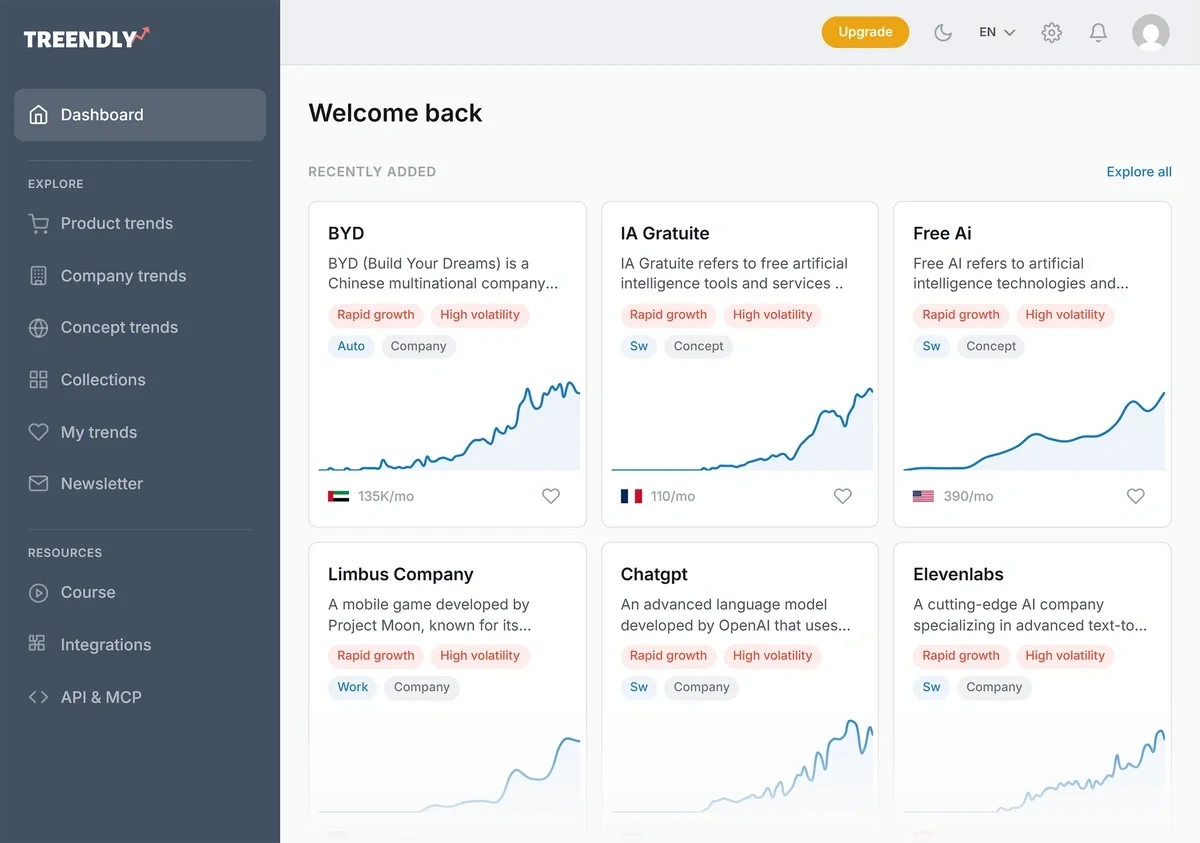
If your job is to be early, a curated stream of rising trends beats a giant searchable archive nearly every time. Volume is a research feature. Curation is a discovery feature. Discovery is where the money is.
Discovery vs research: the real dividing line
This is the cleanest way to think about the two tools.
Exploding Topics is a research tool. You bring a topic, it shows you the history, the shape of the curve, and adjacent terms. Great for validating something you already suspect.
Treendly is a discovery tool. It is built to surface the "unknown unknowns," the trends you would never have thought to search for, because you did not know they existed yet. You open it to be surprised by an opportunity, not to confirm one.
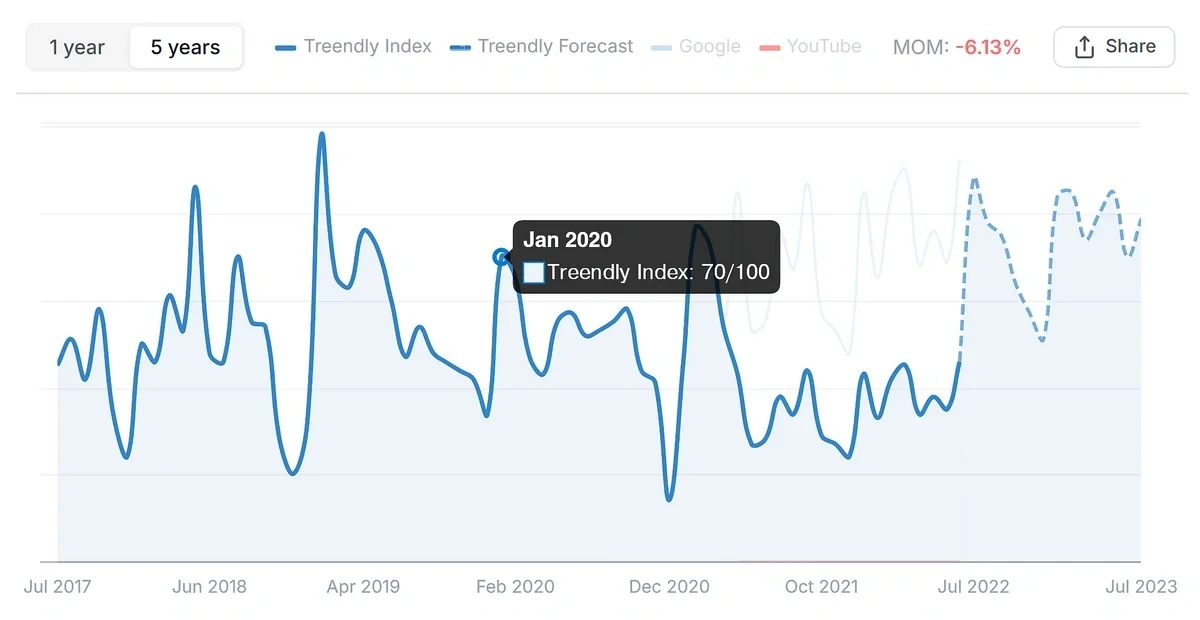
Both jobs are real. But if you already knew exactly which trends to research, you would not need a trend tool at all. The reason people buy one is to catch the thing they would otherwise have missed, and that is precisely what Treendly is optimized for.
Tracking and alerts: get told, do not go looking
Finding a trend once is nice. The value compounds when the tool watches it for you.
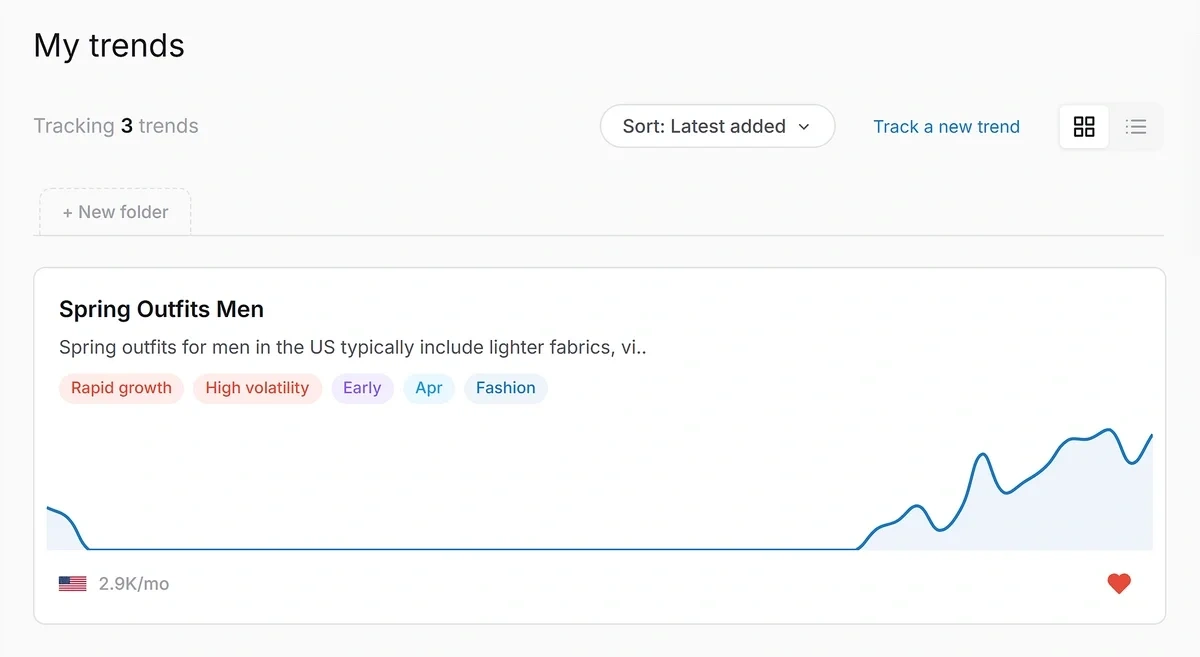
Treendly Pro lets you monitor up to 25 trends and pushes you regular alerts and updates as they move, plus a curated premium newsletter so new rising trends come to you without you opening the app. For most people, 25 actively tracked trends is far more than they can act on anyway. The point is not the cap, it is that the tool does the watching.
Exploding Topics offers tracking too, with higher caps on its more expensive tiers, but you are paying monthly for headroom most users will never use.
Integrations: Notion, Chrome, and an API
A trend tool is only as useful as how easily its data reaches your actual workflow. Treendly is deliberately open here:
- Notion integration. Drop live trend data straight into the docs, databases, and editorial calendars where you already plan.
- Chrome extension. Get a 12-month and 5-year trend chart for any topic right inside Google Search, with zero tracking.
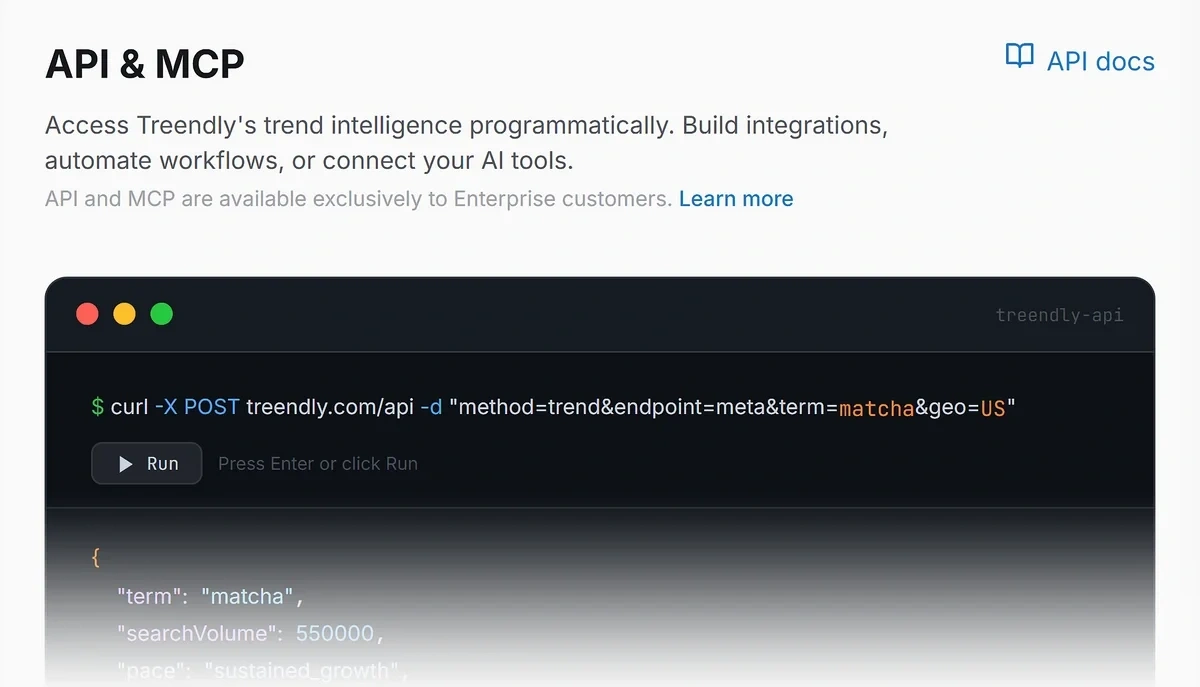
- API access. On the Enterprise plan, pull Treendly data into your own product or dashboards. Our sister product Cart already runs on it.
Where Exploding Topics genuinely fits better
An honest comparison names the cases where the other tool wins, so here they are.
If you are a dropshipper or ecommerce seller who wants deep per-product data like revenue, sales, and reviews, or you specifically need TikTok trend breakdowns and a 15-year historical archive for retrospective analysis, Exploding Topics does those things and Treendly does not lean into them. If those are your core needs, and you are comfortable paying monthly, it is a fair choice.
But notice what those strengths have in common: they are about researching the past in depth, not catching the future early. For the job most people actually hire a trend tool to do, that is the wrong end of the timeline.
The verdict: Treendly wins for most people
Line the two up honestly and it comes down to this:
- Price: Treendly is about five times cheaper ($99/year vs ~$468/year), and it has a real free plan. Treendly wins.
- Discovery: Treendly is built to surface trends you did not know to look for. Treendly wins.
- Curation: one kept trend per 174 signals means less noise, not more. Treendly wins.
- Value add: a free trend-spotting course, a curated newsletter, Notion, and a Chrome extension, all included. Treendly wins.
- Deep product and TikTok research on a huge archive: Exploding Topics wins.
If you are a large team whose entire job is retrospective research and budget is no object, Exploding Topics is defensible. For everyone else, the founders, marketers, sellers, investors, and creators who need to spot what is rising early and cheaply, Treendly is the better tool, and it is not close.
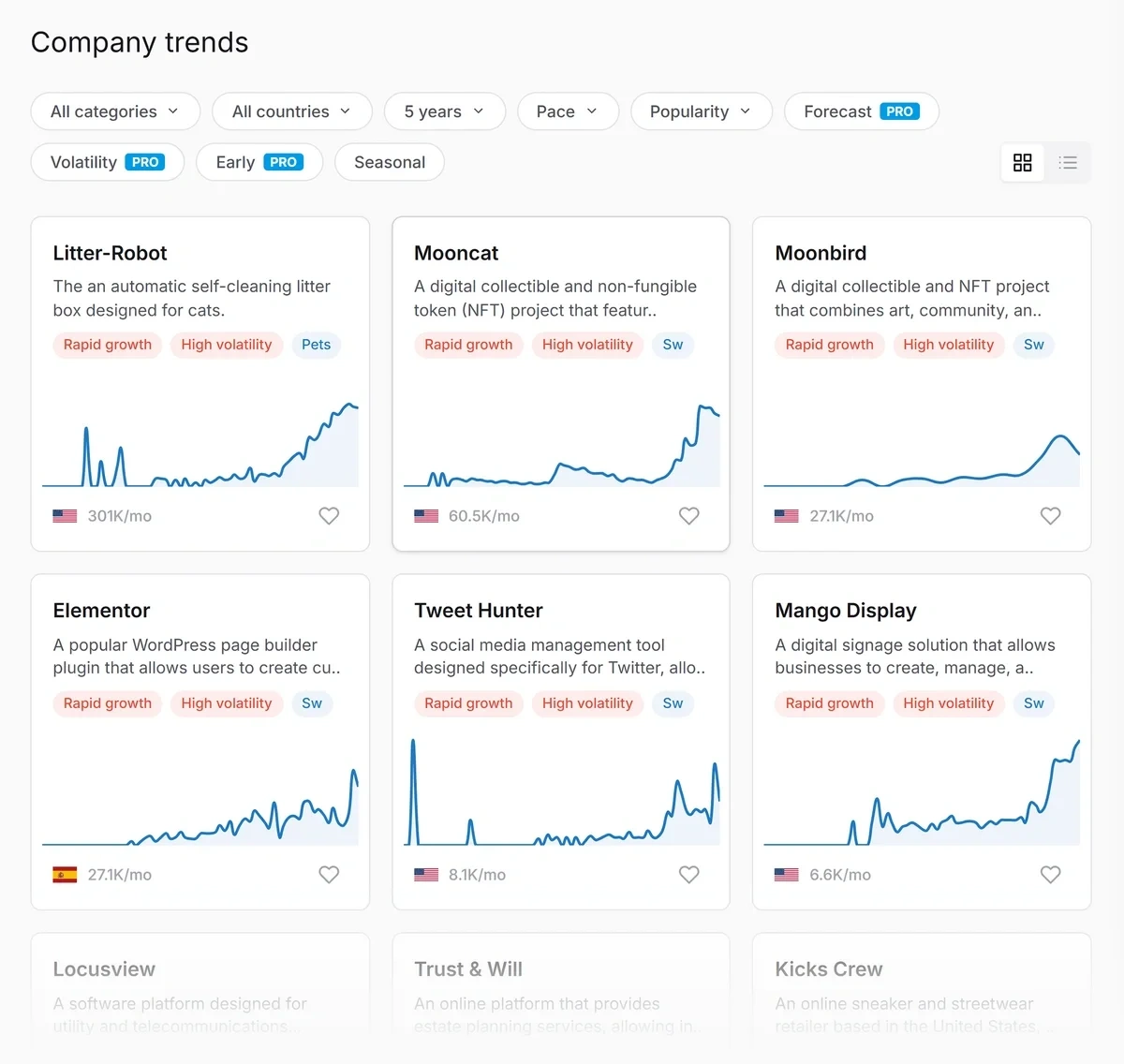
The best part is you do not have to take our word for any of this. Start a free Treendly account, no card required, and see how many rising trends you find in your first ten minutes. Then compare that to a $39/month subscription and decide for yourself.
Try Treendly free and start spotting trends before everyone else.